
Keep doing these
- Pay every account on time
- Keep employment and income stable
- Save updated pay stubs and statements
- Respond promptly to document requests
- Maintain funds needed for closing
- Ask your loan officer before a major change
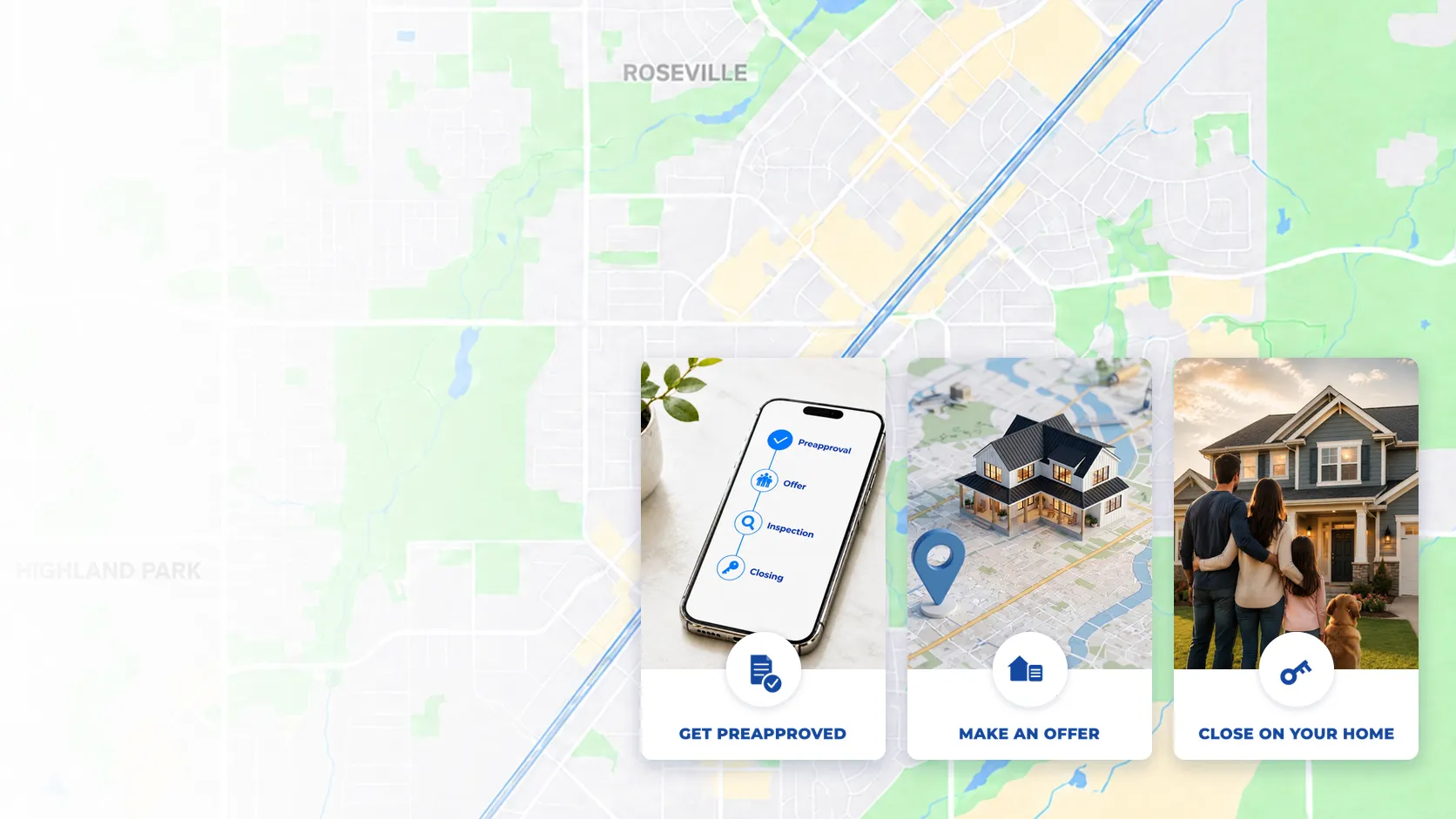
Learn how to prepare, get preapproved, find a home, navigate escrow, and close with fewer surprises.
A home purchase is easier when every decision has a purpose. Buying a house involves more than selecting a property. You are coordinating financing, contracts, inspections, an appraisal, insurance, title work, and final funds—often within firm deadlines. This guide organizes the process into four clear phases so you can see what comes next and how to prepare.
Include taxes, insurance, mortgage insurance, and HOA dues when applicable.
Credit, income, assets, and debts may be reviewed again before closing.
Large transfers or deposits may need a clear source and paper trail.
Build your home buying plan A successful purchase begins before the first showing. Use this stage to understand your finances, choose a comfortable payment, and prepare for the costs that come with ownership.
Review your credit, monthly debts, income stability, and available savings. A lender evaluates the full financial picture, so one number alone does not determine whether you are ready.
Build your budget around the complete monthly payment—not only principal and interest. Include property taxes, homeowner’s insurance, mortgage insurance when applicable, HOA dues, utilities, and routine maintenance.
Your funds may cover a down payment, inspections, appraisal, closing costs, prepaid taxes and insurance, and an initial deposit. The amount varies by loan program and purchase agreement.
Conventional, FHA, VA, USDA, and Section 184 financing serve different buyers. Eligibility, property location, credit, down payment, and long-term cost all help determine the right fit.
Prepare to shop with confidence A strong team and a reviewed preapproval help you move quickly when the right property appears.
Provide your income, asset, employment, identification, and credit information for review. A preapproval clarifies your buying range and shows sellers that financing has been evaluated.
Look for an agent who understands your target area, communicates clearly, and can explain contracts, local practices, negotiations, inspections, and deadlines.
Separate essential needs from preferences. Compare location, commute, condition, taxes, insurance, future repairs, and resale considerations—not just finishes and listing photos.
Move from house hunting to escrow Once you find a home, the pace changes. Your contract sets the price, deadlines, deposit, and protections that guide the transaction.
Before signing, review the proposed price, estimated payment, cash to close, closing date, deposit, and contingencies. The seller may accept, reject, or counter the offer.
A professional inspection can identify visible concerns and future maintenance needs. Review seller disclosures and investigate property-specific items within the contract deadlines.
The appraisal supports the lender’s review of value and property eligibility. At the same time, underwriting confirms the borrower’s income, assets, credit, insurance, title, and loan conditions.
Complete the final steps to ownership The last phase brings the loan, title, property, and funds together. Careful review and verified communication are especially important near closing.
Review your Closing Disclosure when provided, compare the final terms with earlier estimates, and complete a final walk-through to confirm the property is in the agreed condition.
Sign the closing documents, send funds using independently verified instructions, and wait for the transaction to fund and record. Your agent or settlement professional will confirm when keys may be released.
What the buying timeline may look like. The home search can last days or months. After an offer is accepted, the contract creates a more defined schedule.
Prepare
2–6 months
Credit, savings, goals, loan options
Preapproval
1–3 days
Application and document review
Home search
Varies
Tour, compare, and select a property
Escrow
17–30 days
Inspection, appraisal, and underwriting
Closing
1–3 days
Sign, fund, record, and receive keys
These are general estimates, not guaranteed closing times. Property type, contract terms, appraisal availability, documentation, insurance, and loan requirements can affect the schedule.
Small financial changes can create large delays. Your lender may verify credit, employment, income, debts, and assets again before closing. Keep your financial activity steady and communicate before making changes.
When in doubt, ask before you act. A quick conversation can prevent a change from affecting your qualification or closing date.
Common home buying costs. Your actual costs depend on the home, location, loan, contract, and insurance. A personalized loan estimate is more useful than a general rule of thumb.
Your initial equity contribution, based on the selected program.
Lender, title, escrow, recording, and other transaction charges.
Initial deposits for taxes, insurance, and daily interest when applicable.
Inspection, appraisal, and any specialized evaluations you choose.
Savings for moving, maintenance, repairs, and unexpected expenses.
Answers for first-time and repeat buyers.
The full timeline depends heavily on how long it takes to find a property. After an offer is accepted, many financed purchases close in approximately 17–30 days, although the contract, appraisal, loan program, and property can change that estimate.
Plan for more than the down payment. Buyers may also need funds for inspections, an appraisal, closing costs, prepaid taxes and insurance, moving expenses, and post-closing reserves. Your lender can prepare an estimate based on your actual price range and loan program.
No. Several loan programs allow qualified buyers to purchase with less than 20% down, and some eligible borrowers may have zero-down options. The best structure depends on eligibility, monthly payment, cash reserves, and total financing cost.
Avoid opening new credit, financing large purchases, changing employment, moving large sums without documentation, missing payments, or spending funds reserved for closing. Speak with your loan officer before making a major financial change.
Start with accurate numbers
Build your home buying plan with an experienced loan professional. We can review your goals, buying range, estimated payment, available programs, and documents needed for preapproval.