Lower payments to start
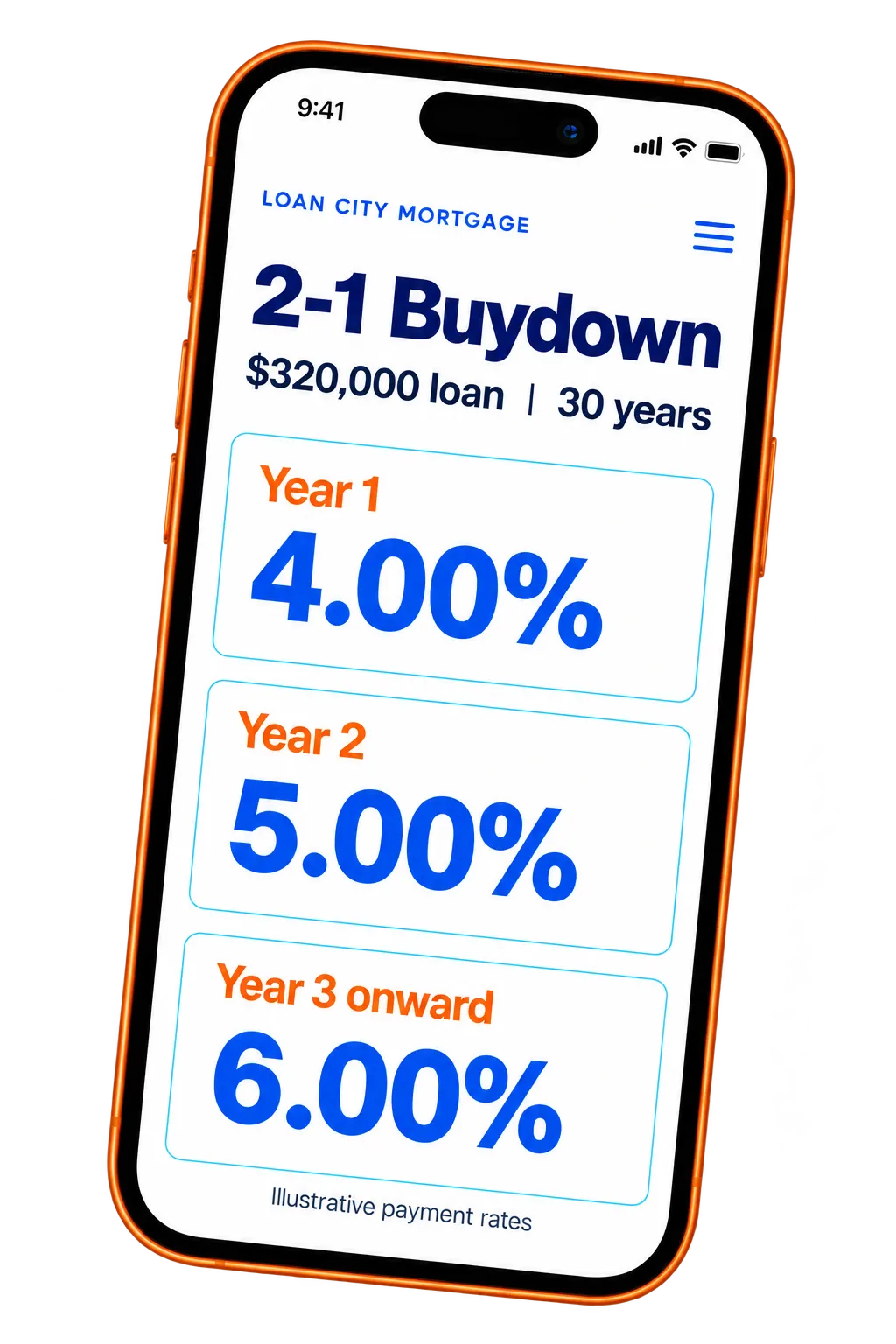
A 2-1 buydown calculates your payment at 2 percentage points below the note rate in year one and 1 point below in year two.
Temporary buydown
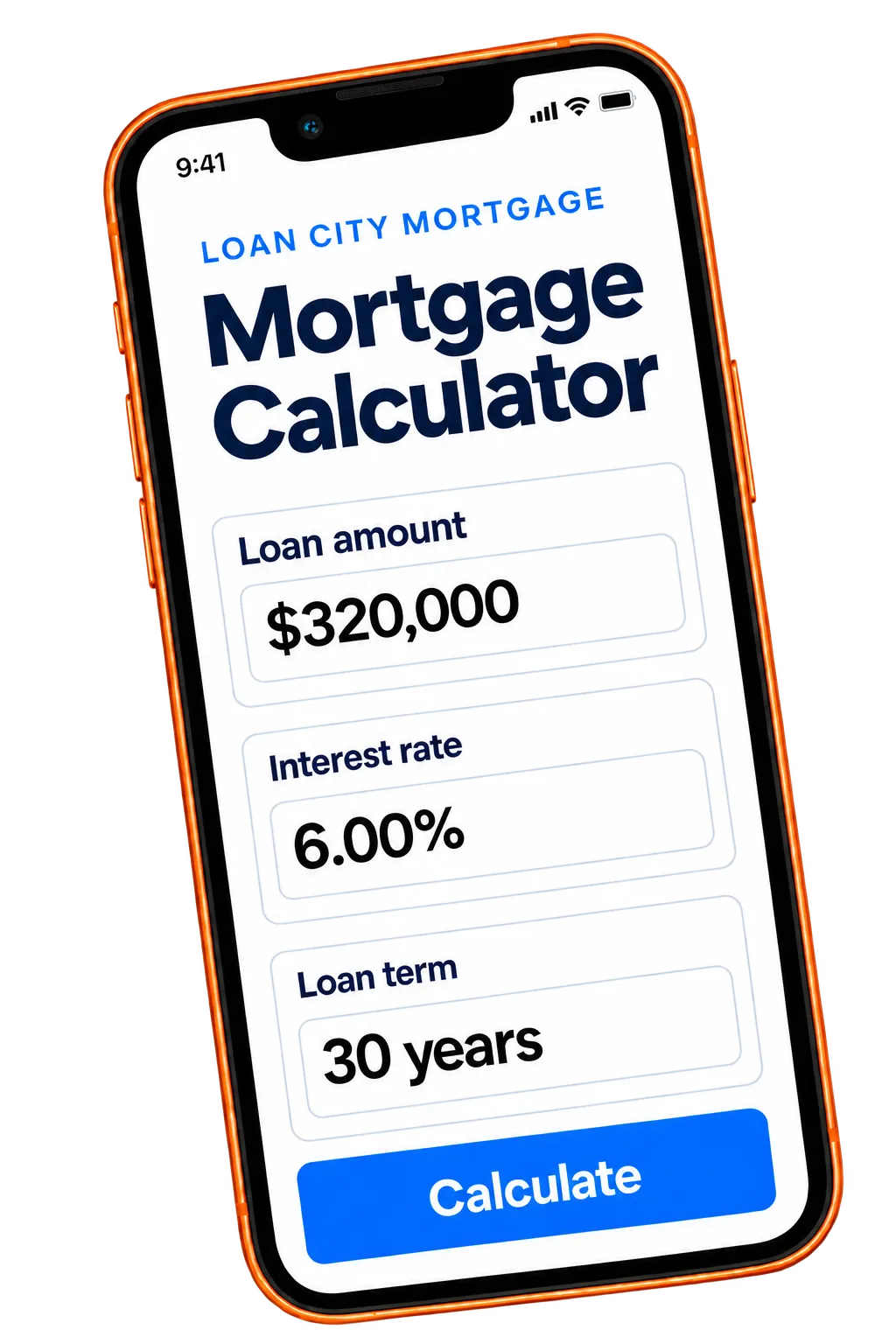
Use our 2-1 buydown calculator to estimate first- and second-year mortgage payments, monthly savings, and the upfront cost of a temporary interest rate buydown. Explore other buydown options or compare the savings with paying discount points.
| Period | Payment rate | Monthly payment | Monthly savings | Annual savings |
|---|---|---|---|---|
| Year 1 | 4.5% | $2,280.08 | $564.22 | $6,770.67 |
| Year 2 | 5.5% | $2,555.05 | $289.26 | $3,471.07 |
| Years 3–30 | 6.5% | $2,844.31 | $0.00 | $0.00 |
Estimated upfront funds needed to cover payment savings during the buydown period.
Payments shown are principal and interest only. Taxes, homeowners insurance, mortgage insurance, and HOA dues are excluded.
A 2-1 buydown calculates your payment at 2 percentage points below the note rate in year one and 1 point below in year two.
Buydown funds cover the difference between your reduced payment and the full scheduled payment. From year three, you pay the full amount.
Compare the early savings with your ongoing payment. Buydown availability and eligible funding sources depend on the loan program and lender.
Compare your options
Both involve an upfront cost, but the savings follow different timelines. A temporary buydown helps with your early payments. Discount points purchase a lower interest rate, which can reduce payments for as long as you keep a fixed rate loan.
| What to consider | Temporary buydown | Discount points |
|---|---|---|
| How the savings work | Funds set aside at closing pay part of your scheduled payment during the introductory period. | You pay an upfront charge in exchange for a lower mortgage note rate. |
| Length of the benefit | Usually one to three years, depending on the selected buydown plan. | On a fixed rate mortgage, the lower rate continues until the loan is paid off or refinanced. |
| Effect on your note rate | The note rate stays unchanged. Your share of the payment increases as the subsidy steps down. | The lower rate becomes part of your loan terms. |
| Upfront cost | Based on the payment differences over the buydown period. Funding sources depend on program rules. | One point equals 1% of the loan amount. The rate reduction offered varies by lender, loan, and market conditions. |
| What to compare | Early payment relief, available seller or lender funding, and your ability to afford the full payment. | The upfront expense, monthly savings, and time needed for those savings to recover the cost. |
| Planning ahead | Budget for the full payment after the buydown ends, even if you hope to refinance sooner. | Consider how long you expect to keep the mortgage before selling or refinancing. |
For discount points, a simple break-even estimate is the upfront cost divided by the monthly payment savings. Compare actual quotes with the same loan amount and term.
Learn more: CFPB guide to points and lender credits.
Temporary savings or a lower rate for the life of your loan?
Explore the upfront cost, monthly savings, and break-even period for discount points, then compare those results with your temporary buydown estimate.
A payment example
For a $450,000 fixed-rate mortgage with a 30-year term and a 6.50% note rate, a 2-1 buydown reduces the borrower’s principal and interest payment for the first two years. The loan’s note rate remains 6.50% throughout.
| Payment period | Payment calculation rate | Monthly payment | Monthly savings |
|---|---|---|---|
| Year 1 | 4.50% | $2,280.08 | $564.22 |
| Year 2 | 5.50% | $2,555.05 | $289.26 |
| Years 3–30 | 6.50% | $2,844.31 | $0.00 |
Estimated buydown funding: $10,241.73. The calculator adds 12 months of the first-year payment difference and 12 months of the second-year difference, using unrounded payments before rounding the total.
These are hypothetical figures, not an offered interest rate or loan quote. Payments exclude property taxes, homeowners insurance, mortgage insurance, and HOA dues. A temporary interest buydown subsidizes early payments; discount points lower the note rate. Your loan program determines which options and funding sources are available.
About buydowns
A temporary buydown uses funds set aside at closing to cover part of your monthly principal and interest payment for a limited period. Your mortgage note rate stays the same.
Your payment is calculated at 2 percentage points below the note rate in year one and 1 point below in year two. With a 6.5% note rate, those payment rates are 4.5% and 5.5%. Starting in year three, you pay the full principal and interest payment at 6.5%.
A 3-2-1 buydown steps down the payment rate by 3, 2, and 1 percentage points in the first three years. A 1-1 buydown uses a 1 point reduction for two years, while a 1-0 buydown uses it for one year. Available options depend on your loan program and lender.
A seller, builder, or lender may fund a temporary buydown, depending on the loan program. Eligible funding sources and contribution limits vary. Your loan officer can confirm how the funds may be provided for your loan.
The cost is the total difference between the full principal and interest payment and the reduced payments over the buydown period. For a 2-1 buydown, add 12 months of first-year savings and 12 months of second-year savings.
For Fannie Mae loans, you must qualify at the full note rate, rather than the reduced buydown payment rate. Your loan officer will confirm the qualifying payment required by your program.
You begin paying the full scheduled principal and interest payment. With a 2-1 buydown, that starts in year three. Budget for that payment from the beginning; taxes and insurance can also change over time.
Yes, subject to your loan terms and refinance qualification. The handling of unused buydown funds depends on the written agreement and program rules. Funds may be credited toward the loan payoff or returned as the agreement permits. Ask your servicer to confirm the treatment before paying off the loan.
No. A temporary buydown subsidizes early payments while your note rate stays unchanged. Discount points are an upfront charge for a lower note rate. Compare the upfront costs, length of savings, and how long you expect to keep the loan.
No. The calculator shows principal and interest payments only. Property taxes, homeowners insurance, mortgage insurance, and HOA dues must be added to estimate your total monthly housing expense.
Often, yes, if your program allows it and the total contributions stay within its limits. The credit must cover all agreed costs. Your loan officer can help compare using the credit for a buydown, other closing costs, or discount points.
Consider the upfront cost, who is funding it, and whether the full payment fits your budget. Compare alternatives using the same loan amount and terms. Future refinancing and lower interest rates are not guaranteed.
Program rules vary. Fannie Mae temporary buydown guidelines
Find the right payment strategy for your home purchase
We’ll help you compare a temporary buydown, discount points, and other uses for available credits so you can choose what fits your budget and plans.
Estimates for educational purposes only. Results are not a loan offer or approval. Actual loan terms, payment amounts, funding requirements, and eligibility must be confirmed with your lender. Estimates use the original loan amount and full loan term for each payment rate; displayed figures are rounded to cents.